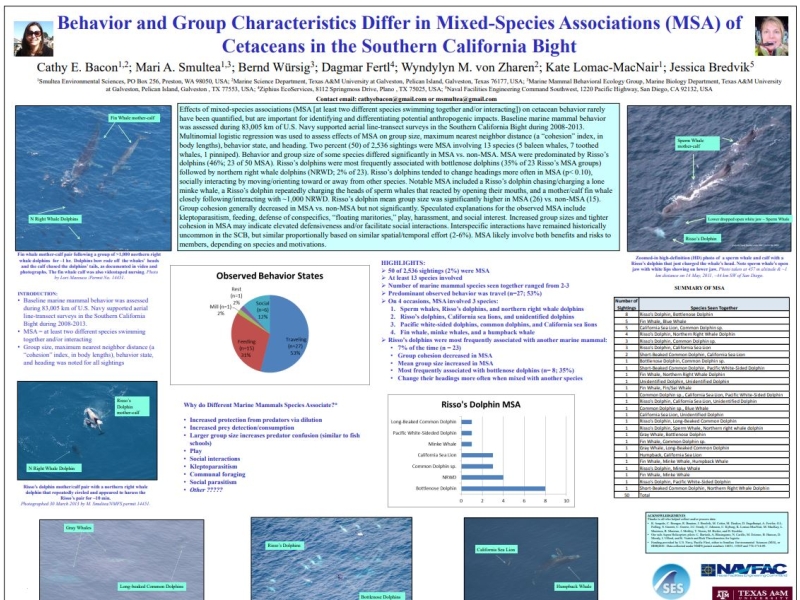

Mixed-species associations of marine mammals in the Southern California Bight, with emphasis on Risso’s dolphins (Grampus griseus).
Aquatic Mammals. 2017.
43:177-184
More details
Collapse details
Date Published:
Publication:Ocean:Region:Species:Methods:
- January 1, 2017
This study investigates mixed-species associations among marine mammals in the Southern California Bight, focusing specifically on Risso's dolphins (Grampus griseus). Over a six-year period, aerial surveys were conducted to record the frequency and nature of these associations, revealing that Risso's dolphins were the most commonly observed species in mixed interactions. The results indicate a significant decline in the proportion of Risso's dolphins involved in such associations compared to historical records, possibly due to an increase in their relative abundance. The findings underline the importance of monitoring mixed-species associations to understand marine mammal dynamics and ecological interactions.
More details
Collapse details
Date Published:
Filesize:
- May 12, 2025
The National Oceanic and Atmospheric Administration (NOAA) Alaska Fisheries Science Center has maintained passive acoustic recorder moorings in areas of interest to the US Navy in the Gulf of Alaska (GOA). Archival data from three of these sites were analyzed for the timing and occurrence of key cetacean species. In addition, three subsurface passive acoustic moorings were deployed for a year (fall 2023 to fall 2024) in areas of mutual interest to NOAA and the Navy. Two of these new moorings, located along the western GOA slope, were redeployed in 2024.
- 2,832.58 KB
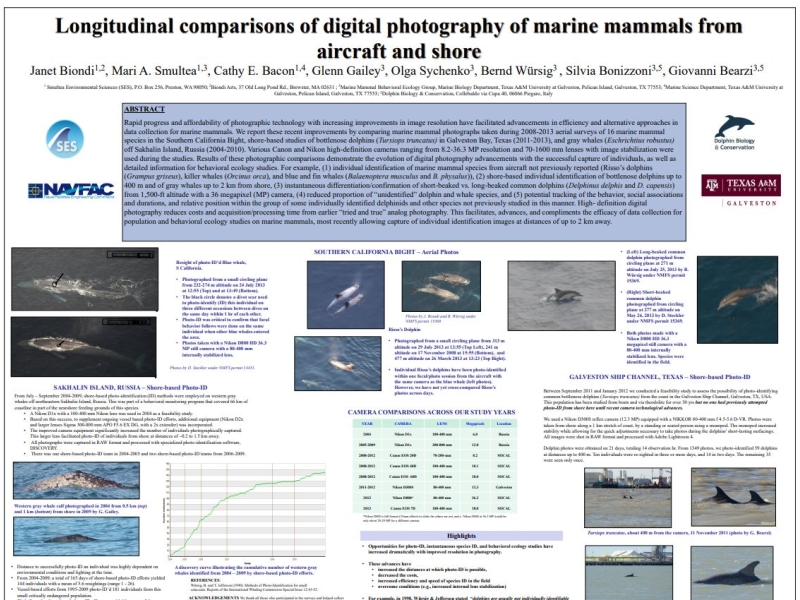
Longitudinal comparisons of digital photography of marine mammals from aircraft and shore.
Southern California Marine Mammal Workshop 2014 .
More details
Collapse details
Date Published:
Filesize:
- January 31, 2014
Rapid progress and affordability of photographic technology with increasing improvements in image resolution have facilitated advancements in efficiency and alternative approaches in data collection for marine mamma ls. We report these recent improvements by comparing marine mammal photographs taken during 2008-2013 aerial surveys of 16 marine mammal species in the Southern California Bight, shore-based studies of bottlenose dolphins (Tursiops truncatus) in Galveston Bay, Texas (2011 - 2013), and gray whales (Eschrichtius robustus) off Sakhalin Island, Russia (2004 -2010).
- 1,436.95 KB
More details
Collapse details
Date Published:
Filesize:
- December 1, 2012
Spatial and temporal distribution patterns, density and abundance of cetaceans in the southern California Bight were assessed through visual and acoustic surveys during five California Cooperative Oceanic Fisheries Investigations (CalCOFI) cruises from August 2011 – July 2012. Visual monitoring incorporated standard line-transect protocol during all daylight transits while acoustic monitoring employed a towed hydrophone array during transits and sonobuoys at oceanographic sampling stations.
- 4,929.65 KB
More details
Collapse details
Date Published:
Filesize:
- September 15, 2010
This report summarizes small boat based research conducted on cetaceans off southern California by the Scripps Institution of Oceanography (SIO) in collaboration with Southwest Fisheries Science Center (SWFSC) from August 2009 – July 2010. The primary objectives of this research were to use sighting, photo-identification, biopsy and acoustical sampling techniques to assess the occurrence, distribution and population structure of small cetaceans in a region that is subject to frequent naval exercises; this information is needed to evaluate possible effects from Mid Frequency Active Sonar (MFAS) trials and ultimately for the development of appropriate management protocols.
- 2,641.69 KB
More details
Collapse details
Date Published:
Filesize:
- February 1, 2014
Cetacean distribution, density and abundance in the Southern California Bight were assessed through visual and acoustic surveys during five California Cooperative Oceanic Fisheries Investigations (CalCOFI) cruises from August 2012-November 2013. Visual monitoring incorporated standard line-transect protocol during all daylight transits while acoustic monitoring employed a towed hydrophone array during transits and sonobuoys at oceanographic sampling stations. Visual effort included 584 observation hours covering 10,900 kilometers yielding 565 sightings of 15 identified cetacean species.
- 4,333.04 KB
Passive Acoustic Monitoring for Marine Mammals in the SOCAL Naval Training Area Dec 2012 – Jan 2014.
More details
Collapse details
Date Published:
Filesize:
- January 1, 2015
Passive acoustic monitoring was conducted in the Navy’s Southern California Range Complex from December 2012 to January 2014 to detect marine mammal and anthropogenic sounds. High-frequency Acoustic Recording Packages (HARPs) recorded sounds between 10 Hz and 100 kHz at three locations: near Santa Barbara Island (880 m), west of San Clemente Island (1000 m), and southwest of San Clemente Island (1300 m). Six baleen whale species were recorded: blue whales, Bryde’s whales, fin whales, gray whales, humpback whales, and minke whales.
- 21,128.75 KB
More details
Collapse details
Date Published:
Filesize:
- November 1, 2014
Passive acoustic monitoring was conducted in the Gulf of Alaska Temporary Maritime Activities Area (GATMAA) from June 2013 to May 2014 to detect marine mammal and anthropogenic sounds. High-frequency Acoustic Recording Packages (HARPs) recorded sounds between 10 Hz and 100 kHz at five locations: a shelf site offshore Kenai Peninsula (200 m depth, site CA), a continental slope site in deep water (850 m depth, site CB), a slope site offshore Kodiak Island (230 m depth, site KO), a deep offshore site at Pratt Seamount (1000 m depth, site PT), and a deep offshore site at Quinn Seamount (930 m depth, site QN).
- 15,262.96 KB
More details
Collapse details
Date Published:
Filesize:
- June 17, 2012
This document contains amplifying technical data and information for the United States Department of the Navy’s Southern California Range Complex Comprehensive Monitoring Report.
- 51,916.96 KB
More details
Collapse details
Date Published:
Filesize:
- January 1, 2011
Navy Research Funded Year Three Project Reports
- 5,699.30 KB
More details
Collapse details
Date Published:
Filesize:
- February 24, 2015
A Distance based visual line-transect survey was designed to gather baseline data on the occurrence, distribution, and population estimations of marine mammals near Silver Strand Training Complex (SSTC) and San Diego Bay (SDB). During the warm and cool season periods between October 2013 and September 2014, seventeen survey days were completed (890.8 km) in SSTC and north San Diego Bay (NSDB). During the course of these efforts, 280 observations were made in the survey areas. Six marine mammal species were sighted, with the predominant species being California sea lions (Zalophus californianus [SSTC, n=132] and NSDB, n=109). Odontocete observations (n=26) were largely comprised of Tursiops truncatus and Delphinus spp. Mysticete whales (Eschrichtius robustus) were sighted in nearshore shallow waters of SSTC during January, February, and April–June.
- 7,737.30 KB
More details
Collapse details
Date Published:
Filesize:
- April 1, 2022
An expedition was conducted with the goal of visually locating, acoustically recording, and obtaining biopsy samples of the Mesoplodon beaked whales that were encountered in 2020 and produce BWB pulses, as well as locating the beaked whales that produce the BW43 echolocation pulse in order to conclusively determine what species produce each of the pulse types.
- 1,398.13 KB
More details
Collapse details
Date Published:
Filesize:
- February 1, 2018
Marine mammal surveys, initiated as part of the CalCOFI cruises in 2004, were continued during 2016-2017. Visual monitoring incorporated standard line-transect survey protocol which includes two experienced observers scanning for marine mammals during transits between CalCOFI stations.
- 1,472.91 KB
More details
Collapse details
Date Published:
Filesize:
- January 1, 2012
Passive acoustic monitoring was conducted in the Navy’s Southern California Range Complex during May 2011 – March 2012 to detect the presence of marine mammal and anthropogenic sounds. Highfrequency Acoustic Recording Packages (HARPs) recorded sounds between 10 Hz and 100 kHz with nearly continuous temporal coverage at a site near Santa Barbara Island (site M) and at a site west of San Clemente Island (site H). Data analysis consisted of detection of sounds of interest by analyst scans of long-term spectral averages and spectrograms, and by automated computer algorithm detection when possible. Representative sounds are presented in this report, as well as details of the computer algorithms used to detect them.
- 37,599.29 KB
More details
Collapse details
Date Published:
Filesize:
- January 1, 2011
Passive acoustic monitoring was conducted at two sites in the Navy’s Southern California Range Complex during April 2010 – April 2011. These data provide information on the presence of marine mammals and anthropogenic sound sources. High‐frequency acoustic recording packages documented sounds between 10 Hz and 100 kHz with nearly continuous temporal coverage at a site near Santa Barbara Island (site M) and a site south of San Clemente Island (site N). For this reporting period, 8,099 hours of acoustic recordings were obtained from site M and 7,779 hours of recordings from site N. Data analysis methods consisted of analyst scans of long‐term spectral averages and spectrograms. The data were divided into three frequency bands and each band was analyzed for the sounds of marine mammal species or anthropogenic sources. Representative sounds are presented.
- 21,362.89 KB
More details
Collapse details
Date Published:
Filesize:
- October 30, 2013
We conducted 18 aerial surveys in the marine waters around San Clemente Island, California, from October 2008 to July 2013, to obtain both observations of marine mammal behavior and data suitable for developing marine mammal density estimates. The primary platform used was a Partenavia P68-C or P68-OBS (glass-nosed) high-wing, twin-engine airplane. Density and abundance estimates were made using line-transect methods and the software DISTANCE 6.0.
- 2,384.70 KB
Southern California Bight marine mammal density and abundance from aerial surveys, 2008-2013.
2026.
7(2):14-30
More details
Collapse details
Date Published:
Ocean:Region:Species:Methods:
- April 16, 2026
We conducted 18 aerial surveys for marine mammals in the Southern California Bight in the vicinity of San Clemente Island from October 2008 to July 2013. Data were collected to obtain density and abundance estimates, as well as focal behavioral observations of marine mammals. The primary platform used was a Partenavia P68-C or P68-OBS (glass-nosed) high-wing, twin-engine airplane. A total of 76,989 km were flown with 2,510 marine mammal groups sighted. Nineteen marine mammal species were identified. Density and abundance estimates were made using line-transect methods and DISTANCE 6.0 software. Due to limited sample sizes for some species, sightings were pooled to provide 4 detection function estimates for baleen whales, large delphinids, small delphinids, and California sea lions. Estimates were limited to species observed at least 20 times during line-transect effort
More details
Collapse details
Date Published:
Filesize:
- June 1, 2013
The objectives of this TO are to conduct aerial surveys of the study area in order to: 1) provide estimates of seasonal abundance for seals and sea lions, 2) identify seasonal distribution patterns for seals and sea lions, 3) collect data to determine seal and sea lion densities, and 4) provide harbor seal abundance data needed by NMFS to prepare a Stock Assessment Report (SAR) for the Washington inland waters harbor seal stock. Additionally, the atlas showing pinniped haulouts for these waters (Jeffries et al. 2000) has not been updated in 13 years and will be revised as well.
- 1,959.27 KB
More details
Collapse details
Date Published:
Filesize:
- June 1, 2014
This report summarizes information from 24 U.S. Navy-funded aerial surveys of pinniped haulout sites in the inland waters of Washington State conducted between March 2013 and February 2014 by Washington Department of Fish and Wildlife.
- 2,946.44 KB
More details
Collapse details
Date Published:
Filesize:
- January 1, 2013
Passive acoustic monitoring using High-frequency Acoustic Recording Packages (HARPs) was conducted at two sites in the Navy’s Northwest Training Range Complex; one on the continental shelf near Cape Elizabeth (CE) and the other at the shelf slope near Quinault Canyon (QC). The inshore shelf site was monitored from December 2011 until January 2012, and the offshore shelf slope site was monitored from December 2011 until July 2012. In this report, information on the presence of marine mammals and anthropogenic sounds collected at these sites is presented.
- 4,259.08 KB
More details
Collapse details
Date Published:
Filesize:
- August 18, 2013
Passive acoustic monitoring was conducted in the Navy’s Southern California Range Complex during March 2012 through December 2012 to detect the presence of marine mammal and anthropogenic sounds. High-frequency Acoustic Recording Packages (HARPs) recorded sounds between 10 Hz and 100 kHz with continuous temporal coverage at a site near Santa Barbara Island (site M), at a site west of San Clemente Island (site H), and a site southwest of San Clemente Island (site N).
- 21,219.45 KB
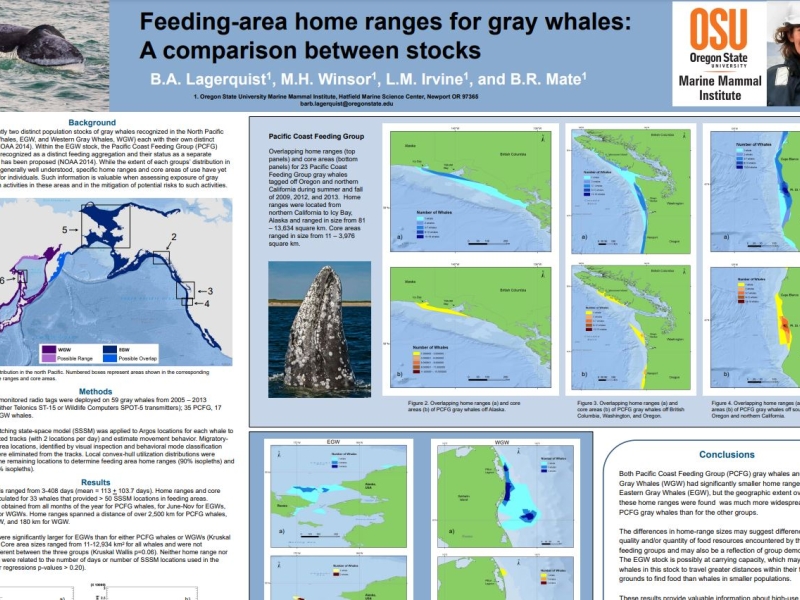
Feeding-area home ranges for gray whales: A comparison between stocks.
21st Biennial Conference on the Biology of Marine Mammals .
More details
Collapse details
Date Published:
Filesize:
- December 13, 2015
Satellite tags were applied to 59 gray whales from three stocks: 17 on Eastern gray whales (EGW) in Baja California, Mexico, in 2005; 35 on Pacific Coast Feeding Group gray whales (PCFG) off Oregon and northern California in 2009- 2013; and 7 on Western gray whales (WGW) off Sakhalin Island, Russia, in 2010 and 2011. Tracking periods ranged from 3-408 days. A Bayesian switching state-space model (SSSM) was applied to Argos locations for each whale to create regularized tracks and estimate movement behavior. Migratory- and breeding-area locations, identified by visual inspection and behavioral mode classification from SSSM, were eliminated from the tracks. Local convex-hull utilization distributions were calculated for the remaining locations to determine feeding area home ranges (90% isopleths) and core areas (50% isopleths). EGWs had home ranges in the Bering and Chukchi seas, ranging from 7,066-30,650 km2. Home ranges for PCFG whales extended from northern California to Southeast Alaska and ranged from 81-13,634 km2. WGWs had very small home ranges near Sakhalin Island, ranging from 285-4,937 km2. Home ranges were significantly larger for EGWs than for either PCFG whales or WGWs (Kruskal Wallis p=0.02). Core area sizes ranged from 11-12,934 km2 for all whales and were largest for EGWs and smallest for WGWs; however these differences were not statistically significant (Kruskal Wallis p=0.06). Neither home range nor core area sizes were related to the number of days or number of SSSM locations used in the analyses (linear regressions p-values > 0.20). The differences in home-range sizes suggest differences in quality and/or quantity of food resources encountered by these three stocks and may also be a reflection of stock demographics. These results provide valuable information about high-use feeding areas for gray whales throughout the Pacific and suggest potential differences in sensitivities to changes in feeding-area habitat.
- 91.49 KB
More details
Collapse details
Date Published:
Filesize:
- June 1, 2013
Pacific coast feeding group (PCFG) gray whales are a group of eastern North Pacific gray whales which do not migrate up to the arctic during the summer feeding season. Individuals have been repeatedly sighted in multiple years at locations ranging from northern California to southeast Alaska from late spring through fall (Calambokidis et al. 2002, Swartz et al. 2006). This report presents preliminary data from a satellite tagging project conducted to identify PCFG gray whale movements in and around the Pacific Northwest in association with the United States Navy’s (Navy) Northwest Training Range Complex (NWTRC).
- 5,338.98 KB
More details
Collapse details
Date Published:
Filesize:
- June 1, 2014
The purpose of this study was to understand the offshore distribution of gray whales and the potential for overlap with Navy activities.
- 2,453.91 KB
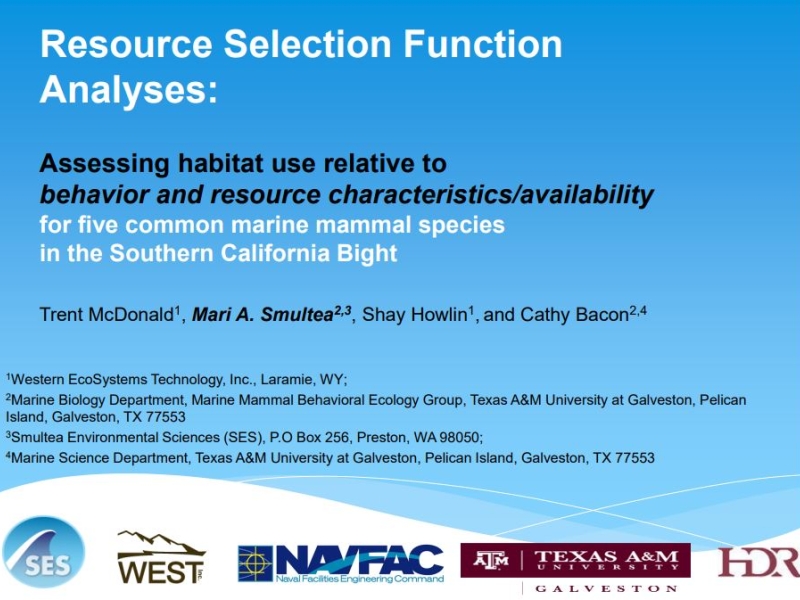
Resource Selection Function Analyses: Assessing habitat use relative to behavior and resource characteristics/availability for five common marine mammal species in the Southern California Bight.
20th Biennial Conference on the Biology of Marine Mammals .
More details
Collapse details
Date Published:
Filesize:
- December 9, 2013
In 2008-2012, fifteen aerial surveys of systematic line-transects were conducted in the Southern California Bight to monitor and obtain baseline data on occurrence, distribution, density, abundance and behavior of marine mammals. Site characteristics at marine mammal locations were analyzed by estimating Resource Selection Functions (RSF) which quantified and described baseline habitat use as a precursor to assessing potential changes in these patterns relative to anthropogenic activities, including Navy exercises. For RSF analyses, characteristics at marine mammal locations were contrasted to characteristics at 35,167 randomly selected “available” locations in the study area. RSFs were estimated via the use-availability approach and predicted probability of species occurrence at all locations in the study area as a function of seven covariate habitat variables. Models for five species (n= 60 fin and 40 gray whale groups, 135 Risso’s and 31 bottlenose dolphin groups, 157 California sea lion groups) were fit for three behavior states (mill, rest/slow travel, medium/fast travel) and all behavior combined to document behavior and habitat associations. Species differed in habitat use and corresponding habitat associations. For example, medium-fast traveling fin whales were significantly associated with deep water over relatively flat basins/plateaus (p=0.0017). Fin whales also had significantly higher probability of using the San Nicolas Basin (p=0.0517). For Risso’s dolphins, rest/slow travel was associated with deeper water (i.e., steep ridges) (p=0.0803). These patterns suggest fast movement across basins and rest/slow travel over ridges. The RSF approach has been successfully implemented for terrestrial systems, quantitatively documenting changes in habitat-use patterns in response to human activities. Results herein illustrate successful application of RSF to pelagic marine mammals, quantitatively considering the role of behavior in habitat selection. Data provide an important 5-year baseline for little-known species to compare potential future changes in habitat selection patterns, assisting in conservation/management decisions in a relatively high anthropogenic use area.
- 1,368.72 KB
Got Milk? Aircraft Observations Provide Rare Glimpses into Whale Calf Nursing and Back Riding.
19th Biennial Conference on the Biology of Marine Mammals. .
More details
Collapse details
Date Published:
Filesize:
- November 27, 2011
Nursing behavior by large cetaceans in situ is not well described. During ~30,000 km of aerial surveys off Southern California to monitor marine mammals in 2008-2011, nursing behaviors were documented for three species: Eastern Pacific gray whale (Eschrichtius robustus), fin whale (Baleanoptera physalus) and killer whale (Orcinus orca). Photographs, video, notes and audio recordings were used to analyze mother-calf interactions. Back riding occurred in gray and fin whales, as described for bowhead whale (Balaena mysticetus) mother-calf pairs by Würsig et al. (1999). During slow sub-surface travel, a fin whale calf swam alongside mother’s peduncle area, touching her head-first for short (
- 156.05 KB
Got Milk? Aircraft Observations Provide Rare Glimpses into Whale Calf Nursing and Back Riding.
Southern California Marine Mammal Workshop 2012. .
More details
Collapse details
Date Published:
Filesize:
- February 3, 2012
Nursing behavior by large cetaceans in situ is not well described. During -30,000 km of aerial surveys off Southern California to monitor marine mammals relative to U.S. Navy military training activities (2008-2011 ), nursing behaviors were documented for three species: Eastern Pacific gray whale (Eschrichtius robustus), fin whale (Ba/aenoptera physa/us) and killer whale (Orcinus orca). Photographs, video, notes and audio recordings were used to analyze mother-calf interactions. Back riding occurred in gray and fin whales, as described for bowhead whale (Ba/aena mysticetus) mother-calf pairs by Wursig et al. (1999). During slow sub-surface travel, a fin whale calf swam alongside mother's peduncle area, touching her head-first for short (
- 1,020.09 KB
Southern California Bight marine mammal density and abundance from aerial surveys 2008-2013.
Southern California Marine Mammal Workshop .
More details
Collapse details
Date Published:
Filesize:
- January 30, 2015
We conducted 18 aerial surveys for marine mammals in the Southern California Bight around San Clemente Island from October 2008 to July 2013. Data were collected to obtain density and abundance estimates, as well as focal behavioral observations of marine mammals. The primary platform used was a Partenavia P68-C or P68-OBS (glass-nosed) highwing, twin-engine airplane. A total of 76,989 km were flown with 2,510 marine mammal groups sighted. Nineteen marine mammal species were identified. Density and abundance estimates were made using line-transect methods and DISTANCE 6.0 software. Due to limited sample sizes for some species, sightings were pooled to provide four detection function estimates for baleen whales, large delphinids, small delphinids, and California sea lions. Estimates were limited to species observed at least 20 times during line-transect effort. For the May-October warm-water season, the estimated average numbers of individuals present were as follows: short-beaked common dolphins (8,520), long-beaked common dolphins (3,314), Risso’s dolphins (1,450), California sea lions (818), bottlenose dolphins (496), fin whales (137), and gray whales (6). During the November-April cold-water season, estimates were: short-beaked common dolphins (15,955), longbeaked common dolphins (6,440), California sea lions (1,454), Risso’s dolphins (993), bottlenose dolphins (290), gray whales (221), and fin whales (140). Several other species were observed for which sightings were too few to estimate numbers present and/or were seen only off effort: blue, Bryde’s, minke, humpback, sperm, Cuvier’s beaked, and killer whales; Pacific white-sided and northern right whale dolphins; Dall’s porpoise; and northern elephant and harbor seals.
- 1,969.40 KB
More details
Collapse details
Date Published:
Filesize:
- January 1, 2012
During FY2012, with funding provided by the Chief of Naval Operations (CNO) N45 Energy and Environmental Readiness Division, the Marine Mammal Monitoring on Navy Ranges (M3R) program carried out several acoustic monitoring efforts to determine the spatial and temporal distribution of cetacean species on the Southern California Anti-Submarine Warfare (ASW) Range (SOAR) , to document the reaction of these species to sonar with a focus on beaked whales, and to provide a means of longterm passive acoustic monitoring. Specifically, M3R participated in a number of marine mammal species visual verification and tagging tests, ONR-sponsored glider tests, the SOCAL 2011-12 Behavioral Response Study (BRS), and for the first time conducted low-frequency acoustic monitoring of baleen whales.
- 2,344.53 KB
Sights and sounds in the sky: integrated acoustic/visual aerial monitoring of marine mammal behaviors using sonobuoys and videography.
Southern California Marine Mammal Workshop 2013 .
More details
Collapse details
Date Published:
Filesize:
- February 1, 2013
We conducted aerial-based monitoring of marine mammal behaviors off the Southern California Bight for 7 days during the winter and spring of 2012. We integrated visual methods (visual observations and videography) with passive acoustic methods (sonobuoys) to study behaviors of cetacean groups. We processed data in real-time, and post-survey, using custom-developed software (Difar-Matlab and Mysticetus). We deployed 23 sonobuoys (model AN/SSQ-53F) through a belly chute, with only a 9% (n=2) failure rate. Over 16 hours of acoustic data were recorded and analyzed from 23 inflight hours. We acoustically detected and recorded sounds from focal groups of fin whales, gray whales, humpback whales and bottlenose dolphins, using DIFAR sonobuoys, and from Risso’s dolphins using omni-directional sonobuoys. A possible case of Risso’s dolphin call-matching with sonar (e.g. mimicry) was detected. Fin whales were the most commonly encountered species, as they migrated northward through the study area. We recorded high signal-to-noise acoustic signals and videography from five fin whale focal groups. We plotted bearings to sequential fin whale calls with call sources emanating from different directions, indicating counter-calling. During post-processing, we integrated visually estimated animal locations with acoustically determined bearings and/or localizations. Results indicate that fin whales did not call when at the surface. We greatly improved real-time and post-processing capabilities via integration of hardware and upgrades to software. Additional surveys and improvements to the system are planned to increase our understanding of marine mammal behaviors and the effects of anthropogenic activities. [Work sponsored by NAVFAC Southwest Division]
- 324.11 KB
More details
Collapse details
Date Published:
Filesize:
- February 18, 2021
Since 2012, Oregon State University (OSU) has been conducting tagging and tracking studies on large whales in support of the U.S. Navy’s efforts to meet regulatory requirements for marine mammal monitoring under the Endangered Species Act and the Marine Mammal Protection Act. The primary goal of these studies has been to determine whale movement patterns, occurrence, and residence times within several Navy training and testing areas in the Pacific Ocean, as reported extensively in a series of previous Technical Reports
- 4,047.12 KB
More details
Collapse details
Date Published:
Filesize:
- January 1, 2024
Passive acoustic monitoring was conducted in the Navy’s Southern California (SOCAL) Range Complex from May 2022 to July 2023 to detect marine mammal and anthropogenic sounds. High-frequency Acoustic Recording Packages (HARPs) recorded sounds between 10 Hz and 100 kHz at four locations: one site west of San Nicolas Island (1,100 m depth, site SN), two sites west of San Clemente Island (1,300 m depth, site E and 1,200 m depth, site H), and one site southwest of San Clemente Island (1,300 m depth, site N) to improve noise monitoring for the SOCAL range.
- 21,409.92 KB
More details
Collapse details
Date Published:
Filesize:
- February 1, 2022
Passive acoustic monitoring was conducted in the Navy’s Southern California Range Complex from April 2020 to 2021 to detect marine mammal and anthropogenic sounds. High-frequency Acoustic Recording Packages (HARPs) recorded sounds between 10 Hz and 100 kHz at four locations: two west of San Clemente Island (1,300 m depth, site E and 1,100 m depth, site H) and two southwest of San Clemente Island (1,300 m depth, site N and 1,200 m depth, site U). With the offshore expansion of the SOCAL range, future noise monitoring will be improved by the deployment of a recorder west of San Nicolas Island (site SN). This new site will replace site U, which is located in the Mexican Exclusive Economic Zone where instrument deployment is difficult.
- 6,849.90 KB
More details
Collapse details
Date Published:
Filesize:
- July 1, 2018
Passive acoustic monitoring was conducted in the Gulf of Alaska Temporary Maritime Activities Area (GATMAA) from May to September 2015 and from April to September 2017 to record the low-frequency ambient soundscape and detect marine mammal and anthropogenic sounds during times of naval exercises in the area. High-frequency Acoustic Recording Packages (HARPs) recorded sounds between 10 Hz and 100 kHz at three locations: a continental slope site in deep water (900 m depth, site CB), a deep water site (hydrophone was placed at 1200 m at a location where depth was approximately 4000 m, site AB), and a deep offshore site at Quinn Seamount (900 m depth, site QN).
- 7,623.00 KB
More details
Collapse details
Date Published:
Filesize:
- November 1, 2015
Passive acoustic monitoring was conducted in the Gulf of Alaska Temporary Maritime Activities Area (GATMAA) from April 2014 to May 2015 to detect marine mammal and anthropogenic sounds. High-frequency Acoustic Recording Packages (HARPs) recorded sounds between 10 Hz and 100 kHz at five locations: a shelf site offshore Kenai Peninsula (200 m depth, site CA), a continental slope site in deep water (900 m depth, site CB), a slope site offshore Kodiak Island (200 m depth, site KO), a deep offshore site at Pratt Seamount (1000 m depth, site PT), and a deep offshore site at Quinn Seamount (900 m depth, site QN).
- 16,317.23 KB
Cetacean occurrence in the Gulf of Alaska from long term passive acoustic monitoring.
Marine Biology. 2021.
68(72):1-29
More details
Collapse details
Date Published:
Publication:Ocean:Region:Species:Methods:
- April 24, 2021
The Gulf of Alaska is an important habitat for a diverse array of marine mammals, many of which were severely depleted by historical whaling. To study current cetacean distributions in this region, passive acoustic monitoring was used to detect species-specific call types between 2011 and 2015 at five locations spanning the continental shelf, slope, and offshore seamounts. Spatial and temporal detection patterns were examined for nine species to compare differences in behavior and habitat use.
More details
Collapse details
Date Published:
Filesize:
- April 1, 2014
During this survey, the visual team surveyed 4,504 kilometers (km) of ‘full-effort,’ which included 349 km of ‘transit-effort.’ There was an additional 375 km of ‘fog-effort’ (transect and transit). Based on total effort, there were 802 sightings (1,998 individuals) of 13 confirmed marine mammal species, with an additional 162 sightings (228 individuals) of unidentified cetaceans and pinnipeds (including those recorded on transit and during off-effort mode).
- 12,416.19 KB
More details
Collapse details
Date Published:
Filesize:
- April 1, 2009
During this project, the visual survey covered a total of 760 kilometers (410 nautical miles) on-effort while transit and fog effort legs accounted for 553 km (298 nm). There were a total of 96 sightings (453 individuals) of 11 confirmed marine mammal species; these included fin, humpback, gray, and minke whales as well as killer whales, Dall’s and harbor porpoise, Pacific white-sided dolphins and Steller sea lions, harbor seals and sea otters. Additionally, there were 36 sightings (46 individuals) of unidentified large whales, dolphins and pinnipeds. Acoustically, operations were conducted 24-hours/day surveying a total of 3,519 km (1,900 nm) and recording 49 acoustic detections of sperm whales and killer whales. Photographs of nineteen individual killer whales and four fin whales were obtained on this cruise and compared to existing catalogs.
- 1,894.30 KB
More details
Collapse details
Date Published:
Filesize:
- December 31, 2022
The Southern California (SOCAL) portion of the Hawaii-Southern California Training and Testing (HSTT) area (SOCAL TR) is one of the United States Navy’s most active training areas, particularly for mid-frequency active sonar (MFAS). Much of SOCAL lies within the Southern California Bight, a productive oceanographic region that hosts a wide variety of marine species. As part of an ongoing study of the distribution and demographics of several marine mammal species within SOCAL, we conducted 32 days of survey effort from 6 January 2022 to 26 November 2022, specifically focusing on the Southern California Anti-submarine Warfare Range (SOAR).
- 2,783.94 KB
More details
Collapse details
Date Published:
Filesize:
- June 1, 2013
This report summarizes the results of deployments within the Northwest Training Range Complex (NWTRC) conducted in conjunction with existing survey efforts off Washington and also includes results from additional deployments on the same species funded with other sources and which are best reported together.
- 2,533.59 KB
More details
Collapse details
Date Published:
Filesize:
- January 15, 2025
This document represents a brief annual summary on work completed between January 1st, 2024 to December 15th, 2024, under award N66604-22-D-F200, which is part of a broad project to monitor the populations of goose-beaked whales (Ziphius cavirostris) and fin whales (Balaenoptera physalus) in the Southern California Testing and Training Range (SCTTR).
- 2,847.52 KB
More details
Collapse details
Date Published:
Filesize:
- August 9, 2013
The main text of this report summarizes two aerial surveys conducted in March and May 2013 during fiscal year (FY) 2013 between 01 August 2012 and 31 July 2013 on the United States (U.S.) Navy’s Southern California (SOCAL) Range Complex. In addition, a preliminary report for a third aerial survey conducted in late July 2013 is discussed separately in Appendix G of this report. This was the fifth FY in which aerial surveys were conducted to obtain baseline data on the occurrence and behavior of marine mammals in the SOCAL.
- 4,896.50 KB
More details
Collapse details
Date Published:
Filesize:
- August 1, 2012
This report summarizes three aerial surveys conducted between 31 August 2011 and 31 July 2012 on the Navy’s Southern California Range Complex (SOCAL), and includes results from the first year of deploying sonobuoys from the aircraft to simultaneously monitor both acoustic and visually observed behaviors.
- 13,207.28 KB
More details
Collapse details
Date Published:
Filesize:
- December 31, 2015
From 2013 to 2015, researchers conducted systematic line-transect aerial surveys for marine mammals in eight subregions of Puget Sound encompassing inland waters of Washington State. Effort consisted of five separate survey periods spanning four seasons (winter, spring, summer and fall) and was funded by the United States Navy (Navy). Surveys focused on estimating seasonal in-water density and abundance of cetaceans, particularly harbor porpoise (Phocoena phocoena).
- 5,860.87 KB
More details
Collapse details
Date Published:
Filesize:
- June 1, 2017
From 2013 to 2016, we conducted systematic line-transect aerial surveys in 8 sub-regions of Puget Sound encompassing inland waters of Washington State. U.S.-funded surveys were conducted year-round and focused on estimating seasonal in-water density and abundance of marine mammals, particularly harbor porpoises and harbor seals
- 4,652.56 KB
Changes in Relative Occurrence of Cetaceans in the Southern California Bight: A Comparison of Recent Aerial Survey Results with Historical Data Sources.
Aquatic Mammals. 2014.
40(1):32-43
More details
Collapse details
Date Published:
Publication:Ocean:Region:Species:Methods:
- August 6, 2014
The relative occurrence of the 16 most common cetacean species in the Southern California Bight (SCB) was compared from the 1950s through 2012 by examining at-sea sighting and stranding data. While systematic survey and population abundance/density data have been available since the 1970s, prior data were collected opportunistically. Comparisons were made through a literature review and using recent results from 15 aerial surveys conducted in the SCB from 2008 through 2012. We attempted to address inconsistency in type of effort across studies by ranking the relative sighting frequency of the most common species based on the most representative study for each period. This comparison revealed changes in the relative occurrence of some species across the approximately 60-y reviewed period. Since the 1950s, common dolphins have remained the most common “species” of cetacean in the SCB. Risso’s dolphin and fin, blue, humpback, and Bryde’s whales appear to have increased in relative occurrence. The relative occurrence of the common bottlenose and northern right whale dolphins; Dall’s porpoise; and gray, killer, minke, Cuvier’s beaked, and sperm whales do not appear to have changed notably since the 1950s. There is possible indication of recent decreased relative occurrence of the Pacific white-sided dolphin. The short-finned pilot whale has decreased since the 1950s and has not been recorded in the SCB since the 1990s, concurrent with the observed relative increase in Risso’s dolphins. Overall, recent aerial surveys indicate that the 16 most commonly seen species in the SCB, in descending order of frequency, were common dolphins (two species), Risso’s dolphin, fin whale, common bottlenose dolphin, gray whale, blue whale, Pacific white-sided dolphin, humpback whale, northern right whale dolphin, common minke whale, Dall’s porpoise, killer whale, Bryde’s whale, Cuvier’s beaked whale (the latter three tied in ranking), and sperm whale. Given that the reviewed historical data from the 1950s and 1960s are virtually the only sources of information available to examine trends over the last 50 to 60 y in this area, we believe this comparative ranking approach provides useful information not available from other sources.
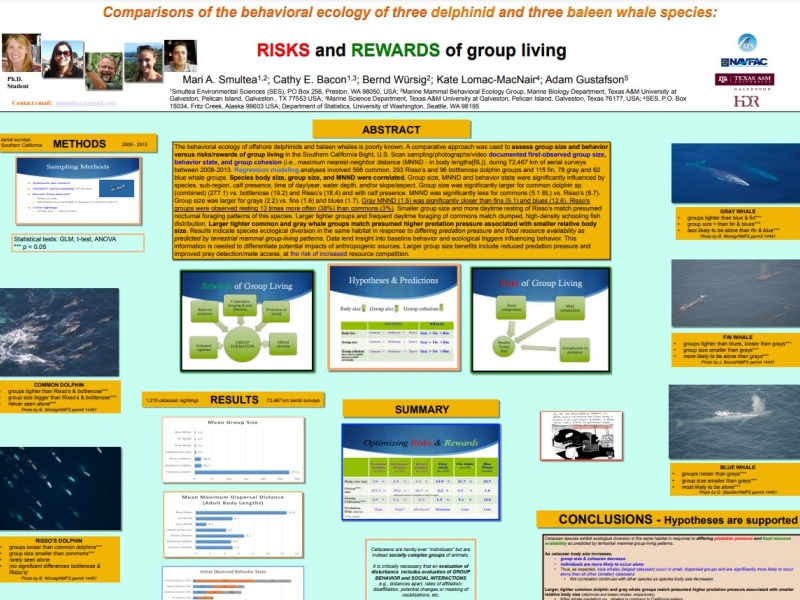
Comparisons of the behavioral ecology of three delphinid and three baleen whale species: Risks and rewards of group living.
20th Biennial Conference on the Biology of Marine Mammals .
More details
Collapse details
Date Published:
Filesize:
- December 9, 2013
The behavioral ecology of offshore delphinids and baleen whales is poorly known. A comparative approach was used to assess group size and behavior versus risks/rewards of group living in the Southern California Bight, U.S.. Scan sampling/photographs/video documented first-observed group size, maximum nearest-neighbor distance (MNND - in body lengths [BL]), and behavior state during 72,467 km of aerial surveys between 2008-2012. Regression modeling analyses involved 566 common, 293 Risso’s and 96 bottlenose dolphin groups and 115 fin, 78 gray and 62 blue whale groups. Species body size, group size, and MNND were correlated. Group size, MNND and behavior state were significantly influenced by species, sub-region, calf presence, time of day/year, water depth, and/or slope/aspect. Group size was significantly larger for common dolphin sp. (combined) (277.1) vs. bottlenose (19.2) and Risso’s (18.4) and with calf presence. MNND was significantly less for commons (5.1 BL) vs. Risso’s (6.7). Group size was larger for grays (2.2) vs. fins (1.6) and blues (1.7). Gray MNND (1.5) was significantly closer than fins (5.1) and blues (12.6). Risso’s groups were observed resting 13 times more often (38%) than commons (3%). Smaller groupsize and more daytime resting of Risso’s match presumed nocturnal foraging patterns of this species.Larger tighter groups and frequent daytime foraging of commons match clumped highdensity schoolingfish distribution. Larger tighter common and gray whale groups match presumed higher predation pressure associated with smaller relative bodysize. Results indicate species ecological diversion in the same habitat in response to differing predation pressure and food resource availability as predicted by terrestrial mammal group-living patterns. Data lend insight into baseline behavior and ecological triggers influencing behavior. This information is needed to differentiate potential impacts of anthropogenic sources. Larger group size benefits include reduced predation pressure and improved prey detection/mate access, at the risk of increased resource competition.
- 7,648.32 KB
Behaviors of Southern California cetaceans: observations from a small aircraft 2008-2013.
107th Annual Meeting of the Southern California Academy of Sciences .
More details
Collapse details
Date Published:
Filesize:
- May 2, 2014
Small aircraft enable a “bird’s eye” view of marine mammal behavior at/near the water surface. During 2008-2013, we flew 87,734 km of line transect and “focal follow” aerial survey effort in the Southern California Bight to systematically collect data on 2,707 sightings of ~222,457 individual cetaceans representing 19 species, funded by the U.S. Navy Pacific Fleet. Focal follows involved circling a cetacean group for 5-60+ minutes and taking high-definition (HD) video and photos to document behavior primarily of blue, fin, gray, humpback, sperm, minke and killer whales; and Risso’s, common bottlenose, short-beaked and long-beaked common, and northern right whale dolphins. HD media allow photoidentification of individuals and species confirmation from altitudes of 1,000-1,500 feet. The “bird’s eye” 71 perspective facilitates descriptive and quantitative analyses of behavior previously little described for typically offshore species: whale calf nursing/back-riding, group cohesion, social affinity/composition, group shape and dimension “envelope”, cues leading to group behavior changes, mixed species interactions, individual whale respiration/dive rates, etc. Behavior differs significantly by species, calf presence, time of day, time of year, subregion, water depth, slope, distance from shore, and presence of other species. For example, Risso’s dolphins were 13 times more likely to rest than common dolphins, and dolphin group size increased significantly with calf presence. As species body size decreases, group size increases and individuals decrease distance between neighbors. We hypothesize that inter-specific differences of spacing and behavior are related to predation pressure, food resources, and communication capabilities/needs that lead to occupation of different niches within the same ecosystem.
- 6,829.46 KB
Comparisons of the behavioral ecology of three delphinid and three baleen whale species: RISKS and REWARDS of group living.
Southern California Marine Mammal Workshop 2014 .
More details
Collapse details
Date Published:
Filesize:
- January 31, 2014
The behavioral ecology of offshore delphinids and baleen whales is poorly known . A comparative approach was used to assess group size and behavior versus risks / rewards of group living in the Southern Californ ia Bight, U.S. Scan sampling / photographs / video documented first-observed group size, behavior state, and group cohesion (i .e., maxi mum nearestneighbor distance (MNND- in body lengths[BL]), during 72 ,467 km of aerial surveys between 2008-2013.
- 7,648.32 KB
Behavior, group characteristics, density and habitat-use patterns of marine mammals off Southern California during 2008-2012 aerial surveys.
Southern California Marine Mammal Workshop 2013 .
More details
Collapse details
Date Published:
Filesize:
- February 1, 2013
Marine mammal seasonal density, abundance, behavior and habitat-use patterns were monitored off southern California 2008-2012 during 15 aerial surveys for the U.S. Navy. Line-transect, scan sampling, and focal follows occurred using video/photography. During 65,238 km of effort (99% Beaufort ≤4), ~190,310 individuals were seen in 2,151 groups (19+ species). Behavior differed significantly by species, depth, slope, aspect, survey sub-region (east or west of San Clemente Island (SCI)), time of year/day, and calf presence. Group size and maximum nearest-neighbor distance (in body lengths) generally increased with body size. Group size was significantly larger with calf presence for Risso’s, common, and bottlenose dolphins. Group size increased significantly across the year among Risso’s but decreased for common dolphins. Risso’s were 13x more likely to rest and significantly less likely to fast travel/be surface active than commons. Resource Selection Function analyses showed that fin whales were significantly more likely to be found west vs. east of SCI, and medium-fast travel predominated over basins vs. rest/mill/slow travel over steep slopes. Density was highest for short-beaked common dolphins followed by long-beaked commons, California sea lions, Risso’s, gray whales, bottlenose dolphins, fin, humpback and blue whales and Pacific white-sided dolphins. Calves occurred in 5% of 331 mysticete sightings.
- 1,434.36 KB
Cetacean mother-calf behavior observed from a small aircraft off Southern California.
Animal Behavior and Cognition. 2017.
4: 1-23
More details
Collapse details
Date Published:
Publication:Ocean:Region:Species:Methods:
- February 1, 2017
During early developmental stages, cetacean calves are dependent on their mothers for survival. Protection of young whales engaged in behaviors that are biologically important is critical for population recovery, so that appropriate management actions can be taken to minimize human disturbance. However, the occurrence and frequency of whale nursing and calves back-riding their mothers (both considered important to calf survival) have rarely been observed nor adequately quantified or defined. Therefore, it may not always be clear when disruption is occurring. We used extended behavioral observations, still photography, and video camera footage obtained during aircraft surveys in the Southern California Bight in 2008 – 2013 to characterize cetacean mother-calf interactions. Based on observations of four mother/calf pairs (two gray whale, Eschrichtius robustus, one fin whale, Balaenoptera physalus, and one blue whale, B. musculus) and one killer whale presumed mother/yearling pair (Orcinus orca), we describe bouts of nursing and calves riding on the backs of their presumed mothers, including activity duration, frequency, and relative body positioning. We conclude with specific definitions useful to wildlife conservation agencies authorizing and establishing restrictions to certain human activities when they might constitute behavioral disruptions.
Resource selection function analyses: Assessing habitat use relative to behavior and resource characteristics/availability for five common marine mammal species in the Southern California Bight.
107th Annual Meeting of the Southern California Academy of Sciences. .
More details
Collapse details
Date Published:
Filesize:
- May 2, 2014
In 2008-2012, fifteen aerial surveys of systematic line-transects were conducted off Southern California to obtain baseline data on occurrence, distribution, density, abundance and behavior of marine mammals (MM). Site characteristics at MM locations were analyzed by estimating Resource Selection Functions (RSF) to quantify and describe baseline habitat use as a precursor to assessing potential changes in these patterns relative to anthropogenic activities, including U.S. Navy training exercises. For RSF analyses, habitat characteristics at MM locations were contrasted to characteristics at 35,167 randomly selected “available” locations in the study area. RSFs were estimated via the use-availability approach and predicted probability of species occurrence at all locations in the study area as a function of seven covariate habitat variables. Models (n = 60 fin and 40 gray whale groups, 135 Risso’s and 31 bottlenose dolphin groups, 157 California sea lion groups) were fit for three behavior states (mill, rest/slow travel, medium/fast travel) and combined to document behavior/habitat associations. Species differed significantly in habitat use and corresponding habitat associations based on behavior. Medium-fast traveling fin whales were associated with deep water over flat basins/plateaus (p=0.0017). Fin whales also preferred the San Nicolas Basin (p=0.0517). Risso’s dolphins rested/slow traveled more in deep vs. shallow water (p=0.0803). Overall, resulting habitat-use patterns demonstrate fast movement across basins and rest/slow travel over ridges where upwelling is most likely to occur. The RSF approach quantitatively demonstrates the importance of considering behavior and social context in habitat selection and use.
- 1,981.11 KB
More details
Collapse details
Date Published:
Filesize:
- January 1, 2020
The CalCOFI marine mammal monitoring program examines seasonal and inter-annual patterns in density, abundance, and distribution on a longer continuous time scale and with a higher rate of sampling than previous cetacean surveys off the California coast, particularly for the winter and spring periods, for which there are currently few data available.
- 2,592.65 KB
Complete
Aerial Surveys of Marine Mammals Conducted in the Inland Puget Sound Waters of Washington, summer 2013 – winter 2016
Project Objectives
1) Conduct aerial surveys during four seasonal periods within the inland Puget Sound Survey Area to assess potential differences in seasonal distribution, numbers, and behavioral state patterns of marine mammals; 2) Collect data to estimate densities of marine mammals in the inland Puget Sound waters for species with sufficient sightings; 3) Estimate abundance for each marine mammal species seen an adequate number of times; 4) Document the distribution and habitat use of each species observed; 5) Document and describe behaviors seen without performing focal follows.
Current
Marine Mammal Sightings During CalCOFI Cruises
Project Objectives
Determine what species and populations of marine mammals are present in Southern California and estimate the abundance and density across seasons
Complete
Passive Acoustic Monitoring of Marine Mammals in the Gulf of Alaska
Project Objectives
Determine the spatial distribution and occurrence of beaked whales, other odontocetes, and baleen whales in offshore areas using bottom-mounted passive acoustic recorders and deep-diving autonomous gliders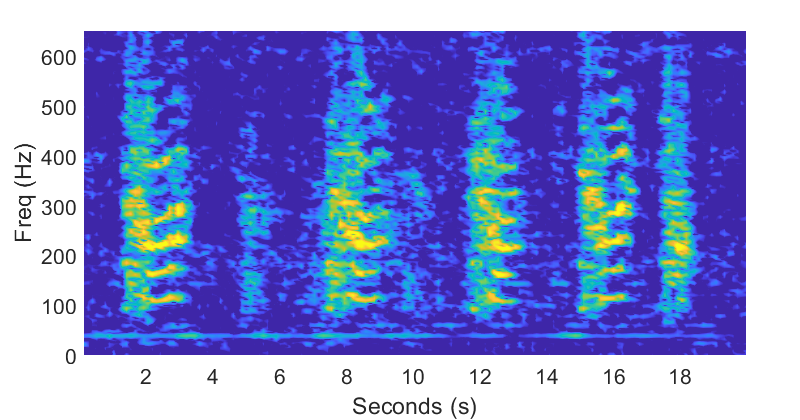
Western gray whale detections in western Pacific
June 8, 2026
Gray whale vocalizations are well-known and have been detected on mobile U.S. Navy passive acoustic monitoring (PAM) systems for decades. Gray whales produce highly variable and complex signals. Given some historical and conservation interest in the overall distribution and migratory patterns and behaviors of gray whales in the north Pacific, the Navy has conducted systematic monitoring for the calls of gray whales in times and areas that would inform species distribution patterns.